
Positive masculinity: how to teach it without blame
Positive masculinity means boys can be strong, confident and close to people without needing to dominate anyone. This guide for teachers and parents covers what it looks like, why schools are teaching it now, and how to teach it so boys keep listening.
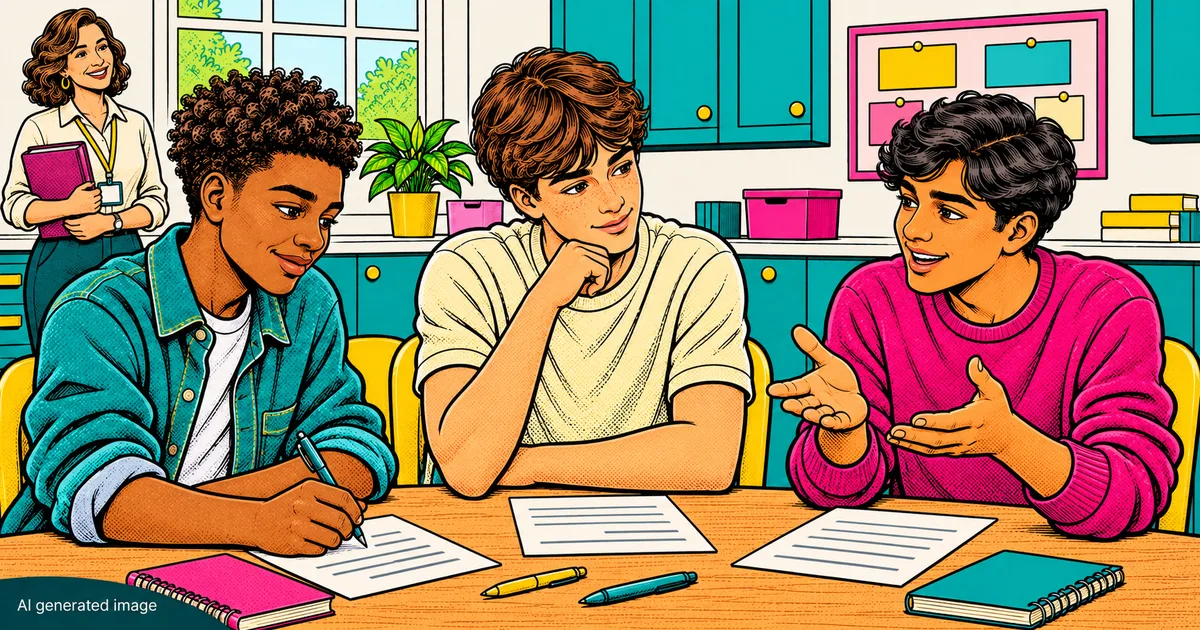
Masculinity is not the problem
Harmful behaviour is. That one line shapes everything we teach in Module 03: Respect, Power and Positive Masculinity.
Positive masculinity is a set of healthy ways to be a boy or a man: confident, brave, in charge of yourself and connected to other people. It is not a softer version of boyhood. It is not a list of what boys get wrong.
The distinction matters in a classroom. If pupils feel accused, they stop listening, and the boys who most need the conversation are usually the first to switch off.
Why we rarely open with "toxic masculinity"
The phrase is meant to describe harmful norms, but many boys hear "being male is toxic". In a 2024 King's College London and Ipsos survey, 37% of men aged 16 to 29 called it an unhelpful term, roughly double the share of young women (19%). Use it when you are unpacking the phrase with pupils, not as the headline.
Why schools are focusing on it now
Misogyny in schools is common enough that young people treat it as normal, and the statutory guidance now asks schools to teach a positive alternative.
Ofsted, 2021
Ofsted's review of sexual abuse in schools and colleges spoke to more than 900 children and young people. 92% of girls and 74% of boys said sexist name-calling happened a lot or sometimes to them or their peers. Some saw no point in reporting it.
RSHE guidance, 2025
The revised DfE RSHE statutory guidance, in force from 1 September 2026, says pupils should have opportunities to develop positive ideas of masculinity and femininity, including learning from positive male role models.
No stigma
The same guidance asks schools to avoid gendered language that might stigmatise boys, and to help pupils see that "most boys and young men are respectful to girls and young women".
Ofsted's advice to leaders was to assume sexual harassment is happening in their setting, even without reports, and to respond as a whole school. The guidance also asks pupils to understand the links between sexism, misogyny and violence against women and girls, and it names the risk from misogynistic content online. We cover that in a separate piece on the manosphere.
What positive masculinity looks like day to day
It looks like behaviours a boy can practise on an ordinary Tuesday, not a personality he has to change.
Confidence
Being clear about what you think without dominating anyone.
Courage
Speaking up when the group goes too far.
Self-control
Feeling anger without using fear to get your way.
Connection
Wanting closeness and respect without feeling owed them.
None of these are exclusive to boys, which is useful. Girls can hold the same standards, and nobody is being asked to be less of themselves.
Role models help most when they are close to home. A PE teacher who apologises when he gets something wrong, an older brother who says "leave it" in the group chat, a coach who praises effort over aggression. Point these out when you see them.
Banter or harm?
The test is whether everyone can still say stop. Boys often defend banter because it is a real part of friendship, so start by agreeing that some of it is fine.
Banter
Both people are genuinely comfortable. It can stop without punishment. No one is exposed or degraded.
Warning zone
Someone laughs but looks uncomfortable. The topic is personal, sexual, racist, sexist or about status.
Harm
Someone is targeted, humiliated, pressured, isolated, threatened or unable to safely object.
This links straight to consent. In both cases the other person has to be free to say no, and to have that no respected without paying for it socially.
Bystander skills
Most group harm carries on because the group lets it, so give boys simple moves they can actually use. The safest option is the right one, not the bravest-looking one.
Distract
Change the subject, call a mate away, start a new conversation. It stops the moment without a confrontation.
Say something short
"Nah, that's not funny" or "leave it" works better than a speech. Only if it feels safe.
Don't add to it
No laughing along, no forwarding, no reacting in the chat. Silence from the audience takes away the payoff.
Check in afterwards
A quiet "you alright?" to the person targeted tells them they are not on their own.
Tell an adult
Telling a trusted adult is not snitching when someone is being hurt. It is how the harm stops.
Handling pushback in the classroom
Pushback usually means pupils are engaged, so treat it as a question rather than a threat. Stay curious, keep your voice level, and avoid arguing to win.
"So all men are bad?"
"No. Most boys are respectful. This is about behaviour, and behaviour is something anyone can choose."
"It's just a joke"
"Maybe. Who's laughing, and could the other person say stop without it costing them?"
"Girls do it too"
"Sometimes, yes, and that's not okay either. Respect works both ways."
"Why is it always about boys?"
"Fair question. Boys get plenty of pressure too. Let's look at where some of it comes from."
Set ground rules at the start and use an anonymous question box for the things pupils will not say out loud. If a comment targets a pupil, or crosses into a threat, it is no longer a discussion point: follow your behaviour and safeguarding policies and tell your DSL. Our staff CPD covers keeping a lesson going through giggles, silence and challenge.
What parents can do at home
Parents have the advantage of time, and short, regular conversations do more than one big talk.
- Ask what he is watching and who he finds funny, with curiosity rather than alarm.
- Notice and name the good stuff: "That was decent, the way you stuck up for him."
- Talk side by side, in the car or on a walk. Eye contact makes some boys clam up.
- Show the behaviours yourself, including apologising and handling frustration calmly.
- Talk about what a good relationship looks like, not only about risks. Our guide to healthy relationships is a starting point.
Mistakes to avoid
Most mistakes come from good intentions delivered in a way that makes boys feel like suspects.
Leading with blame
Opening with statistics about male violence tells every boy in the room he is the problem.
Putting it on girls
Teaching girls to protect themselves, without teaching respect, moves the responsibility to the wrong people.
Giving names airtime
Arguing about a particular online personality turns the lesson into a fan debate. Talk about ideas and tactics.
One assembly and done
A single session will not shift a culture. Short, repeated work across year groups does more.
Ignoring "small" comments
Ofsted found everyday harassment so common that pupils saw it as normal. Low-level comments are where that starts.
Forcing disclosure
Nobody should be asked to share personal experiences or act out harm in front of classmates.
If something has already happened
A lesson on respect can bring up something a young person has seen or experienced. Make sure pupils know who to talk to in school, and where to go outside it. There is a full list on our support lines page.
NSPCC Helpline
Advice for any adult worried about a child, including professionals unsure whether to refer.
Frequently asked questions
What is positive masculinity, in one sentence?
It is being confident, brave, self-controlled and connected to other people, without using fear, humiliation or pressure to get your way.
Is this about making boys less masculine?
No. Strength, competitiveness and loyalty are not the problem. The work is about how those qualities are used, and making sure no one else has to pay for them.
Should we ever use the phrase "toxic masculinity"?
It can be useful as something to examine together: what does it mean, who uses it, and why do some boys find it unfair? Used as an opening label, it tends to shut the conversation down.
What age should we start?
The building blocks start in primary: stereotypes, kindness, name-calling and asking before you join in. Our Module 03 is pitched at KS4 and adapts for KS3 and post-16, from friendship and teasing to dating, rejection and group chats.
A pupil made a misogynistic comment in class. What should I do?
Name the behaviour calmly and move the lesson on, then follow up privately. If the comment targeted a pupil, was threatening or suggests a wider concern, record it and pass it to your DSL under your school's policies. Do not debate it out in front of the class.
Do schools have to teach this?
Schools must have regard to the revised RSHE statutory guidance from 1 September 2026, which includes positive ideas of masculinity and femininity. Parents can request withdrawal from sex education, but not from relationships or health education.
My son says school is always blaming boys. How should I respond?
Take the feeling seriously before you argue with it. Ask what was said, and what he thought was unfair. Then share the school's own line: most boys are respectful, and the lessons are about behaviour, not about being a boy.
Should boys and girls be taught separately?
Mostly together. The guidance wants both to practise respectful communication and understand experiences different from their own. Some schools add a small-group follow-up where pupils can ask questions more freely.
Sources: Ofsted, Review of sexual abuse in schools and colleges (June 2021); Department for Education, Relationships Education, Relationships and Sex Education (RSE) and Health Education statutory guidance (published July 2025, in force 1 September 2026); The Policy Institute, King's College London and Ipsos, Emerging tensions? How younger generations are dividing on masculinity and gender equality (February 2024); Childline and NSPCC. Helpline numbers were checked at the time of writing.