
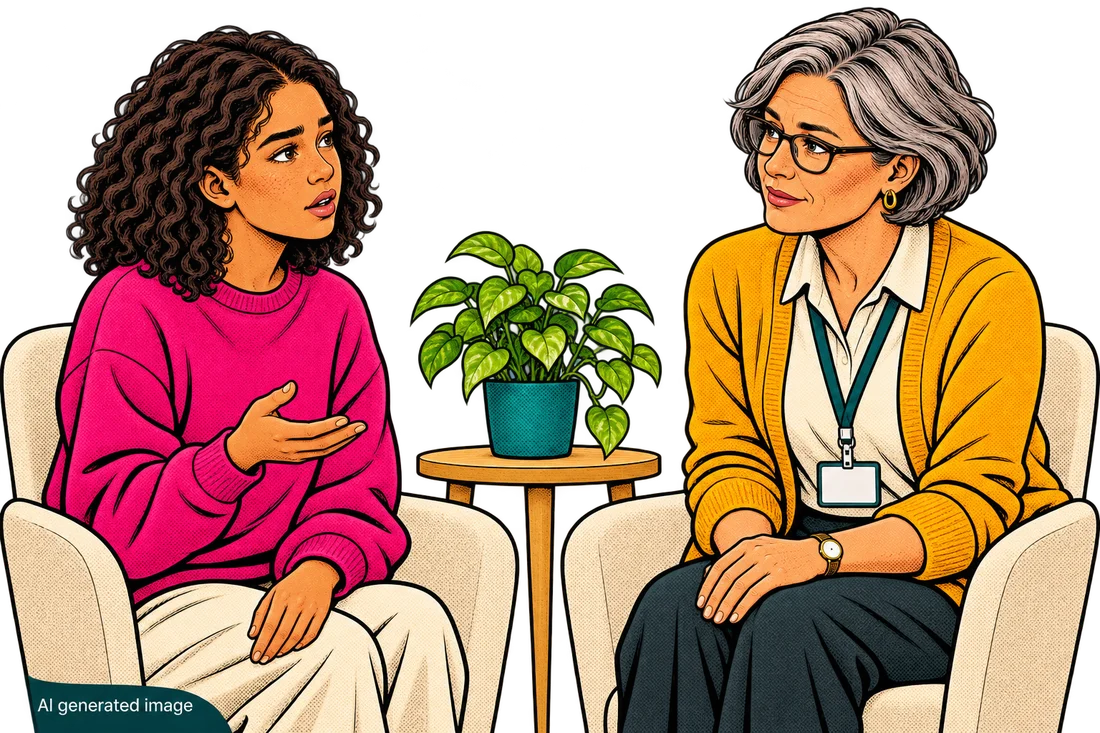
Pressure, Harassment, Abuse and Getting Help
Recognise what is happening. Respond safely. Report to the right person. Recover with support.
What it covers
Pressure, Harassment, Abuse and Getting Help is a 60-minute RSE session for KS4 pupils, adaptable for KS3 and post-16. Pupils learn to recognise pressure, harassment and control, respond safely, and report to the right person.
Pressure is not always loud, and abuse is often a pattern. Responsibility sits with the person causing harm, not with the person affected, whatever they did or did not do at the time.
- Baseline
- KS4, adaptable for KS3 and post-16
- Length
- 60 minutes, with shorter and longer routes
- Planned with
- Your DSL and RSE lead, before delivery
- Last reviewed
- November 2026
By the end, pupils can
- Recognise pressure, harassment, control, abuse and unsafe behaviour
- Understand that responsibility sits with the person causing harm
- Know safe ways to respond in the moment and afterwards
- Practise how to help a friend without becoming the investigator
- Identify the right people and routes for reporting and support
The four-step pathway
Recognise
Notice pressure, patterns, fear, control or repeated unwanted behaviour.
Respond
Create distance, pause the conversation, check safety and avoid escalation.
Report
Tell a trusted adult, use the school route and preserve useful information.
Recover
Get emotional support and rebuild choice, safety and confidence.
Control can be disguised as care
Monitoring
Checking phones, messages, location or passwords.
Isolation
Deciding who someone can see, follow, message or sit with.
Jealousy as justification
Using jealousy to justify anger, rules or accusations.
Threats
Threatening self-harm, exposure or retaliation if someone leaves.
Fear
Making someone feel afraid to disagree.
Responding in the moment
Pause
“I'm not discussing this now.”
Create distance
Move seats, leave the chat, go to a public space.
Check safety
Find a friend, staff member or trusted adult.
Do not escalate
Avoid threats, retaliation or public call-outs.
Helping a friend
Listen calmly
Let them speak without pushing for every detail.
Believe the feeling
“I'm glad you told me.”
Ask what they need
Safety, space, support, an adult.
Do not promise secrecy
Unsafe information cannot be kept secret.
Go together
Tell a trusted adult together if possible.
How the session runs
Safety frame
No public disclosures. General scenarios with no names of people, schools or accounts. Pupils are reminded they can talk privately to a trusted adult afterwards.
Agreed with your DSL
How questions and concerns will be handled is agreed with the DSL before delivery. We do not improvise on law, police process or medical advice.
After the session
The school receives the learning outcomes and support routes. We collect feedback without asking for disclosures, and check with staff whether any concerns emerged.
Adapting it by age
KS3
Peer pressure, personal space, online behaviour, jokes, rumours and trusted adults.
KS4
Coercion, stalking, sexual harassment, image-based abuse and relationship control.
Post-16
Campus culture, parties, intoxication, digital evidence and intimate-partner abuse.