
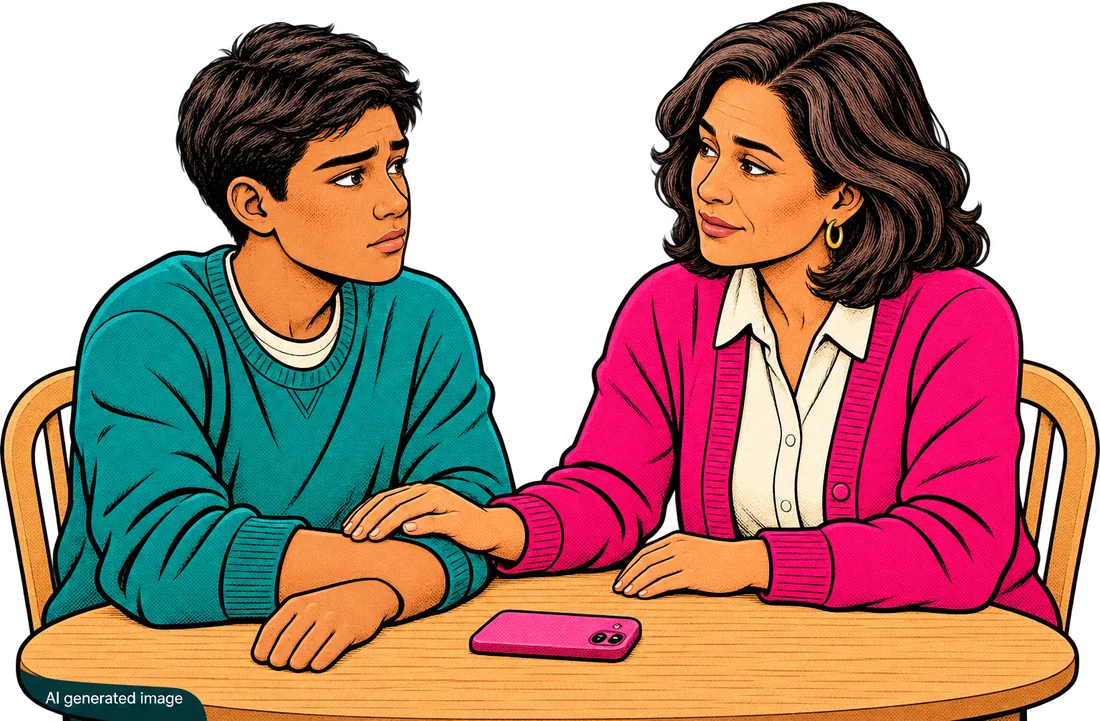
Sextortion
An add-on module on sexual blackmail: how it works, why the victim is never the criminal, and what to do in the first ten minutes.
What it covers
Sextortion is an add-on RSE module: a 60-minute session for KS4 pupils, adaptable for KS3 and post-16. It explains how sexual blackmail starts, why the young person targeted is never the criminal, and what to do in the first ten minutes.
Sextortion is when someone, usually a stranger online, tricks or pressures a young person into sending a sexual image, then threatens to share it unless they pay money or send more. In the UK it is a crime called sexual blackmail, covered by laws including the Sexual Offences Act and the Online Safety Act.
- Baseline
- KS4, adaptable for KS3 and post-16
- Length
- 60 minutes, with shorter and longer routes
- Planned with
- Your DSL and RSE lead, before delivery
- Last reviewed
- November 2026
By the end, pupils can
- Recognise how sextortion approaches typically begin
- Understand that the person targeted is the victim, not the criminal
- Know the immediate steps: do not pay, do not send more, screenshot, block, report, tell an adult
- Reduce risk through account settings and what is shared online
- Know who to contact for help, including Childline and the Revenge Porn Helpline
How it usually starts
The approach
Someone poses as a person your age on Instagram, Snapchat or TikTok, chats, flirts, and sends a stolen image first.
The flip
Once an image comes back, the tone changes: pay, or it goes to everyone you know. It moves very fast and the pressure is constant.
The truth
You are the victim, not the criminal, even if you sent the picture willingly at the start.
If it is happening
Do not pay
Paying does not end it.
Do not send more
And do not argue with them.
Screenshot everything
Then block them everywhere.
Report and tell
Report to the app and tell an adult. Most stop the moment you stop replying.
Reducing the risk
Keep identifying details out
Never have your face and something identifiable (a school jumper, posters, tattoos) in the same image.
Check who is real
If you have never met someone in person, don't assume they are real. Ask for a live pose.
Lock accounts down
Private accounts, no strangers added, Quick Add and Suggested Friends turned off.
Have a safe adult
Agree a code word with one trusted grown-up so you can ask for help fast.
How the session runs
Where it fits
An add-on, taught only once Consent has been covered. It pairs naturally with Module 04: Digital Relationships.
Who it is for
Year 9 and above. Built for boys and girls alike, because boys aged 14 to 18 are targeted most.
What staff get
The same first-ten-minutes steps pupils learn, so the adult they tell knows what to do.