
The manosphere: what staff and parents need to know
The manosphere is a loose network of online spaces and influencers that blame women and feminism for the problems some boys and men face. Coming across it is not the same as believing it. This guide covers what it is, why it lands, and how adults can respond without pushing a young person further in.
What the manosphere is
The manosphere is not one group or one website. Refuge describes it as an umbrella term for many communities spread across video platforms, gaming spaces and social media. What ties them together is hostility to feminism and a low opinion of women.
The strands overlap and often disagree with each other. Four come up most often.
Incels
Short for "involuntary celibates". Men who want a partner, cannot find one, and come to resent women and the men who do have relationships.
Men's rights activists
Men who see themselves as victims of unfair treatment, for example in family courts. Some use this to justify hostility to women and to equality laws.
Pick-up artists
Groups that teach men to win women over through manipulation, treating relationships as a contest to be won.
"Going their own way"
Men who argue the only safe choice is to cut women out of their lives altogether.
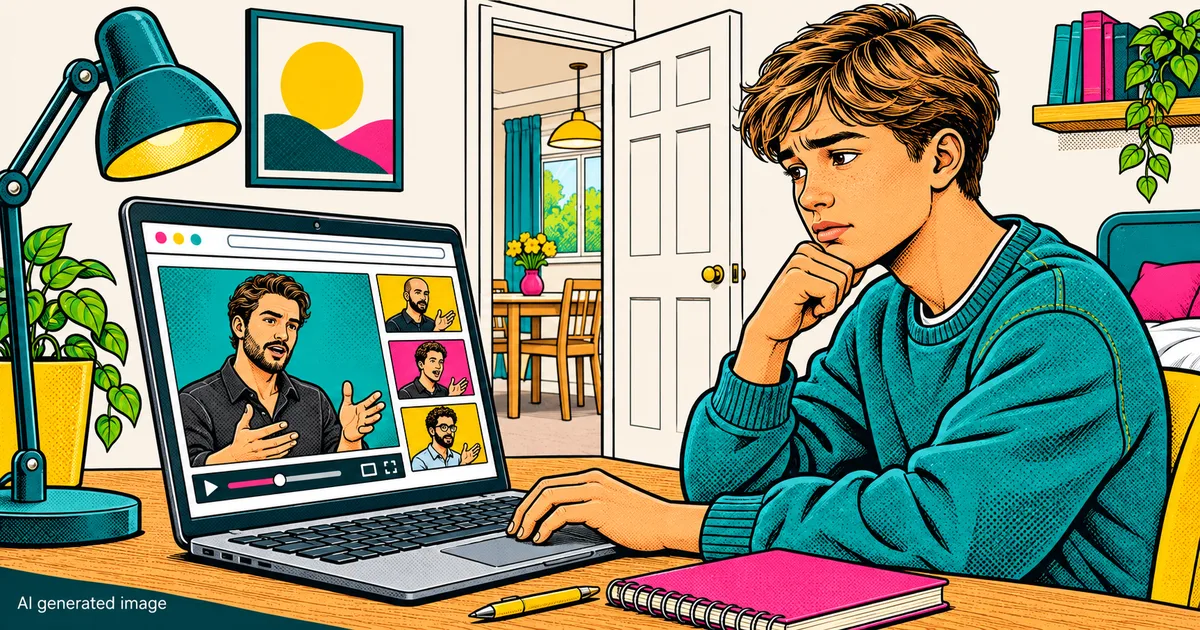
Young people rarely meet these labels. They meet the content: a clip, a podcast, a meme or a confident man talking straight to camera. The 2025 Netflix drama Adolescence brought the subject into many family homes. In March 2025 the Prime Minister met its creators, and Netflix made it free to secondary schools through the Into Film+ service.
Why it appeals to some boys
The manosphere usually offers something a boy actually wants. Understanding that is the first step to offering him something better.
Belonging
A sense of community matters most to boys who feel lonely or left out.
An explanation
If dating or confidence feels hard, it offers someone to blame.
Self-improvement
Fitness, discipline and "levelling up" content is often the way in.
Money and status
Influencers sell a lifestyle of wealth and control that looks like success.
The algorithm
Platforms keep serving more of whatever holds attention.
That last point is worth knowing in detail. Researchers from UCL and the University of Kent set up TikTok accounts based on boys interested in things like loneliness or self-improvement. The recommendations started with those interests and drifted towards anger and blame aimed at women. After five days, misogynistic videos had risen from 13% to 56% of what the accounts were shown.
Interest is not the problem
Wanting to be fitter, richer or more confident is a normal part of growing up. The concern is the message that comes attached: that women are the obstacle, and that respect means control.
How it shows up in school and at home
It usually arrives as language and attitude, not as a stated belief. School leaders in the same study said misogynistic ideas were moving off screens and into everyday interactions between pupils.
Language
New slang for rating girls, phrases repeated word for word from a video, and confident claims about what women are "really" like.
Attitudes to women
Talking over girls in class, dismissing female staff, or refusing instructions from a woman teacher. At home, the same can be aimed at a mum or sister.
"Jokes"
Comments framed as banter or irony, so anyone who objects can be told they cannot take a joke.
Warning signs worth noticing
Patterns matter more than single moments. A boy quoting a video once is not a crisis; a steady shift in how he talks about girls and women is worth a conversation.
Probably ordinary teenage life
A new gym routine. Interest in money, business or crypto. Watching popular creators his friends watch. Testing out edgy opinions to get a reaction. Wanting more privacy online.
Worth a closer look
Contempt for girls or women staff that keeps growing. Talk of women as property or as owing men something. Withdrawal from friends into one online world. Anger that seems borrowed rather than his own. Sharing content that mocks or threatens women.
How to talk with a boy about it
The aim is to keep him talking, not to win the argument. Shame and lectures tend to confirm what the content has told him: that nobody listens to boys.
Get curious first
"Who are you watching at the moment? What do you like about him?" He is more likely to show you than to defend it.
Find the need underneath
If he wants confidence, purpose or a plan for his future, say that those are good things to want.
Challenge the idea, not him
The DfE guidance puts it simply: staff should "challenge the ideas, rather than the person expressing them". That works at home too.
Ask who benefits
Some influencers make money from courses, subscriptions or products. "What is he selling?" is a fair question that does not insult the viewer.
Offer other men to look up to
Coaches, relatives, older pupils, sports figures. Boys need examples of strength that include kindness. Our post on positive masculinity has ideas.
Keep the door open
One conversation will not change much. Ten calm ones might. Our parent talks cover how to keep these conversations going.
What schools can do
The strongest response is a whole-school one. The DfE's statutory guidance, in force from September 2026, expects pupils to learn to recognise misogyny and expects staff to tackle everyday sexism both in and beyond the classroom.
Whole-school culture
Agree what counts as misogynistic language and respond the same way every time, in corridors as well as lessons. Make sure women staff are backed up when they report it.
RSE that includes boys
Teach respect, power and healthy masculinity without casting boys as the problem. Our Respect, Power and Positive Masculinity module and Digital Relationships module are built for this.
Staff confidence
The guidance asks teachers to avoid stigmatising boys and to avoid naming or signposting specific content creators. Staff need practice saying something calm in the moment.
Record incidents
Log misogynistic incidents the way you log other prejudice-related ones. Patterns across a year group only become visible when someone writes them down.
The government's violence against women and girls strategy, set out to Parliament in December 2025, committed £20 million to tackling harmful attitudes in young people. It also promised training to help parents and professionals spot the warning signs of misogyny.
When it becomes a safeguarding concern
Most of what schools see is a culture and education issue. It becomes a safeguarding matter when there is harm or risk of harm to anyone, including the boy himself.
Pass it to your DSL the same day if you see
Threats towards girls, women or staff. Sexual harassment or harmful sexual behaviour. Praise for people who have attacked women. Talk of violence, or signs a young person is in contact with adults pushing extreme views. Do not investigate it yourself, and call 999 if anyone is in immediate danger.
Prevent is part of the picture but only for some cases. It is a counter-terrorism programme, and a referral needs a concern that someone may be drawn into terrorism. Home Office guidance says misogyny is a common theme in terrorist narratives, and that violent adherents of incel subcultures could meet the terrorism threshold. Your DSL decides whether a concern goes down that route or through the school's usual safeguarding procedures.
Where to get help
For more on how young people get pulled into harmful content, read online safety: what young people need to watch for. A full list of helplines is on our support lines page.
NSPCC Helpline
Advice for any adult worried about a child, including staff unsure whether to refer.
Childline
Free and confidential for anyone under 19, including boys who want to talk something through.
Police
101 for non-emergency reporting, 999 if someone is at immediate risk.
Frequently asked questions
Is the manosphere just one famous influencer?
No. Individual names come and go, but the network is much wider: forums, podcasts, video channels, gaming communities and meme accounts. Focusing on one person can make it seem as if the problem disappears when he does.
Should I take his phone away or block these accounts?
Sensible settings and limits help, especially for younger children. A sudden ban on its own tends to end the conversation and makes the content more appealing. Pair any limits with talking about why.
He says it is all just a joke. How do I respond?
Ask who the joke is about and how they might feel hearing it. Humour is how many of these ideas spread, because it makes objecting look humourless. You do not need to prove it is serious to say it is not okay.
Is gym and self-improvement content a problem?
Not in itself. Plenty of it is harmless or helpful. Watch for the turn from "here is how to get stronger" to "here is why women are to blame".
Can girls be affected too?
Yes. Girls are on the receiving end of these attitudes in school and online. RSE on respect and power should include everyone.
Should we show Adolescence in school?
It is available free to secondary schools through Into Film+. Watch it yourself first, plan the follow-up discussion, and tell your DSL beforehand in case it prompts a disclosure.
Should teachers name influencers in lessons?
The DfE guidance advises against directly signposting specific content or content creators. Teach pupils to recognise the techniques instead, so the learning works whoever is popular next term.
Does misogyny count as extremism?
Most misogyny is a behaviour and culture issue handled through your normal behaviour and safeguarding policies. Where there is a concern about violence or terrorism, the DSL considers whether a Prevent referral is appropriate.
Sources: Refuge, What is the manosphere, and how is it linked to domestic abuse? (March 2026); University of Kent, Social media algorithms amplify misogynistic content to teens (February 2024), on the UCL, University of Kent and ASCL report Safer scrolling; Department for Education, Relationships education, relationships and sex education (RSE) and health education statutory guidance (in force from 1 September 2026); GOV.UK press release, Downing Street opens doors to Adolescence creators (31 March 2025); Minister for Safeguarding, Oral statement on the violence against women and girls strategy (18 December 2025); Home Office, Prevent duty guidance for England and Wales; NSPCC and Childline. Helpline numbers were checked at the time of writing.