
Promoting healthy relationships
Adults are good at warning young people about what is dangerous and much less confident describing what is good. This is a practical guide for teachers and parents on what healthy looks like, what to watch for, and what to do.
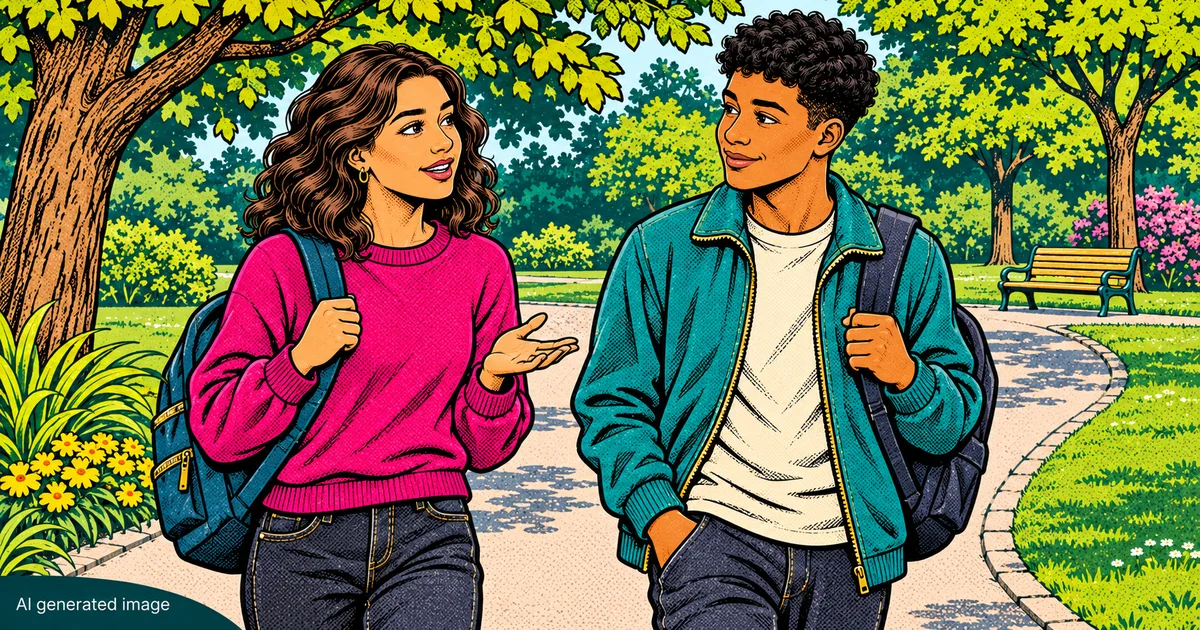
Start with the picture, not the warning
Most relationship education begins with harm. Young people hear about abuse, grooming and pressure long before anyone describes what a good relationship feels like from the inside.
That leaves a gap. If someone has no picture of healthy, they have nothing to measure their own relationship against, and the first serious warning sign looks like normal life. Adults close that gap by naming the ordinary things: what respect sounds like, what a fair disagreement looks like, what someone does when you say no.
Five things a healthy relationship has
These apply as much to friendships and family as to dating, which is why they work with younger pupils too.
Respect
Your feelings, time, body and privacy matter to the other person.
Trust
You are not constantly tested, monitored or accused.
Honesty
You can tell the truth without being punished for it.
Independence
You keep friends, interests and space of your own.
Care
Each person thinks about the effect of what they do.
The test worth teaching
After spending time with this person, do you feel more yourself or less? A healthy relationship makes room for both people. It does not shrink one of them.
Green flags are behaviours, not promises
Young people are often sold intensity as proof of love. It helps to point at actions instead: they listen when you say no. They do not punish you for needing space. They can apologise without making it all your fault. They are pleased when you have other friends. They respect privacy, online and offline.
Note that none of those requires a grand gesture. That is the point.
Conflict is not the same as control
Adults sometimes over-correct here, treating every argument as a red flag. Disagreement is normal in any relationship. Fear is not.
Conflict
Both people can speak. Both can say no. Both stay free to pause, disagree or leave.
Control
One person uses fear, guilt, monitoring, punishment or isolation to get their way.
The question
After that exchange, does the other person feel safer and more respected, or smaller and more afraid?
Warning signs
Patterns matter more than incidents. One tense week is not a pattern; the same behaviour in a different form every fortnight is.
What teachers may notice
A pupil checking their phone anxiously or replying to messages under pressure. Withdrawal from friendship groups. Changes in dress or behaviour that track a relationship rather than a fashion. Absence that follows a pattern. A partner waiting at the gate who decides who they speak to. Jokes at someone's expense that nobody quite laughs at.
What parents may notice
Constant contact and a fear of not replying fast enough. Friends dropping away. Asking permission for ordinary things. Secrecy about arguments. Money or possessions disappearing. A young person apologising a great deal, or explaining their partner's behaviour before you have asked.
What the law actually says
This is worth knowing, because the answer changes with age.
The Domestic Abuse Act 2021 created the first statutory definition of domestic abuse in England and Wales. It covers physical or sexual abuse, violent or threatening behaviour, controlling or coercive behaviour, economic abuse, and psychological or emotional abuse, between two people aged 16 or over who are personally connected. It can be a single incident or a pattern.
Controlling or coercive behaviour has been a criminal offence since section 76 of the Serious Crime Act 2015 came into force in December 2015. The Domestic Abuse Act 2021 removed the requirement that the two people live together, so post-separation abuse is covered.
Under section 3 of the 2021 Act, children who see, hear or experience the effects of domestic abuse are recognised as victims in their own right, not witnesses.
Below 16, the framing changes
Abuse in a relationship between two under-16s is not "domestic abuse" in law. In a school setting it is handled as child-on-child abuse under your safeguarding procedures and Keeping Children Safe in Education. The behaviour is no less serious; the route is different. If in doubt, your DSL decides, not the teacher who noticed.
What to do: the conversation
Ask about the feeling, not the facts
"How do you feel after you've been with them?" travels further than "what happened?". It does not require a young person to accuse anyone.
Take it seriously without taking over
Ultimatums, bans and "I never liked them" tend to close the conversation and push the young person closer to the relationship.
Name the specific behaviour
"Checking your phone isn't something people who trust each other do" lands better than "they're controlling you".
Keep the door open
Say clearly that they can come back at any point, including after saying nothing is wrong. Most people leave a relationship long after they first doubt it.
Record and refer
In school, write it down and pass it to the DSL the same day. Do not investigate it yourself.
Endings need as much teaching as beginnings
How someone handles rejection tells you a great deal about their respect for boundaries. Young people need to hear that feeling hurt is allowed and punishing someone is not: no pressure, no stalking, no shaming, no revenge posts, no group chat pile-ons.
They also need permission to end something without a long explanation. "This isn't working for me" is a complete sentence. If there is any fear involved, ending it in a public place, with a friend nearby and an adult informed, is a safety plan rather than an over-reaction.
Where to get help
NSPCC Helpline
Advice for any adult worried about a child, including professionals unsure whether to refer.
National Domestic Abuse Helpline
For anyone aged 16 or over experiencing abuse in a relationship.
Men's Advice Line
Support for men experiencing domestic abuse, and for those helping them.
Police
101 for non-emergency reporting, 999 if someone is at immediate risk.
Frequently asked questions
At what age should we start teaching this?
Long before dating. The building blocks (asking before you touch someone, hearing no, keeping a friend's secret unless it is unsafe, noticing how you feel around someone) work from KS1 upwards. By KS3 the same ideas transfer to relationships without needing to be retaught from scratch.
A pupil says their relationship is fine and I am worried. What now?
Record what you have observed and pass it to your DSL. You do not need the young person to agree there is a problem before you log a concern, and you should not press them for detail or evidence.
My child's partner seems controlling. Should I ban the relationship?
Bans rarely work and often make things worse, because they force a choice between you and the partner. Naming specific behaviours, staying available, and keeping their other relationships alive tends to be more effective. If there is fear, threat or violence, seek advice from a helpline rather than handling it alone.
Is jealousy a red flag?
Jealousy is a feeling, and feelings are not the problem. What matters is what someone does with it. "I felt insecure when you were talking to them" is a feeling named honestly. "Block them or we're finished" is control.
Does any of this apply to friendships?
All of it. Control, isolation and humiliation appear in friendship groups long before they appear in relationships, and friendship is where most young people first practise setting a boundary.
What if the young person causing harm is also our pupil?
They usually are. Both need a response: safeguarding for the person harmed, and a proportionate, educative response for the person causing harm. Treating a 14-year-old as beyond help is neither accurate nor safe for the next person they date.
How do we teach this without lecturing?
Use scenarios rather than statements, and let pupils argue about where a behaviour sits. "Reads their partner's messages: healthy, needs a check, or not okay?" produces more learning than being told the answer.
Can parents get involved without embarrassing everyone?
Parent sessions work best when they cover what the school is teaching and why, so home and school use the same words. That way a parent can pick up a conversation their child has already started in class.
Sources: Domestic Abuse Act 2021 (statutory definition; section 3 on children as victims); Serious Crime Act 2015, section 76 (controlling or coercive behaviour); Keeping Children Safe in Education; NSPCC, Childline, Victim Support and the National Domestic Abuse Helpline. Helpline numbers were checked at the time of writing.