
Red flags in teenage relationships: a guide for adults
Controlling behaviour in teenage relationships rarely looks like a film villain. It looks like a phone that never stops buzzing. This is a checklist for teachers and parents: what to look for, how to tell a bad week from a pattern, and exactly what to say and do next.
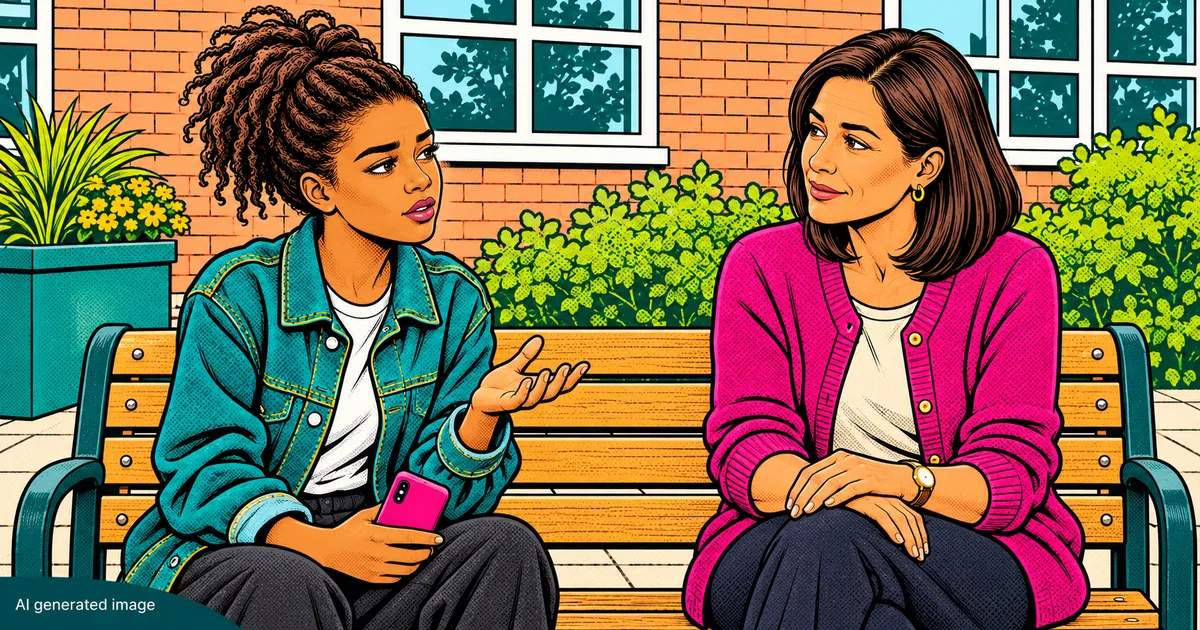
Red flags in a relationship are about control
A red flag is any behaviour that shrinks someone's freedom to choose: who they see, what they wear, what they post, when they reply. It is about what a person does, not what kind of person they seem to be.
Our guide to healthy relationships covers what good looks like and how conflict differs from control. This post goes further into spotting the warning signs and responding well.
One thing to hold on to from the start: young people often do not see these behaviours as harm. The NSPCC notes that teenagers may not recognise what is happening to them, and that adults can overestimate how well older children can protect themselves.
Digital red flags: the checklist
Most teenage relationships now run as much through a phone as in person, so most of the control does too.
Constant messaging
Messages all day and night, with anger or sulking if replies are slow. The young person checks their phone anxiously and cannot switch it off.
Location tracking
Location sharing that is demanded rather than agreed, or that cannot be turned off without an argument. Questions about where they were, even when they said.
Checking the phone
Going through messages, asking for passwords or logging in to their accounts. Childline lists this as a sign of an unhealthy relationship.
Pressure for images
Asking again and again for nudes, sulking at a no, or saying "you would if you loved me". Any request for images from an under-18 is a safeguarding matter.
Jealousy over followers
Rows about who they follow, who liked a post, or who is in a group chat. Demands to block, unfollow or delete people.
Threats to share
Hints or threats to post private messages, screenshots or images, especially after an argument or a break-up.
Red flags you can see offline
The same control shows up face to face. Watch for a young person who drops friends one by one, or asks a partner's permission for ordinary things. Notice criticism of how they look, and changes in clothes or appearance that seem to please someone else.
Other signs listed by Childline include gifts that come with an expectation attached, and a partner who threatens to hurt themselves if the relationship ends. That last one is heavy for anyone to carry, let alone a 14-year-old.
Look at the effect, too. A pupil who seems anxious, withdrawn, or suddenly on their phone much more or much less than usual is showing a change worth asking about.
One-off or pattern?
A single jealous message is not abuse. A pattern is what matters, and patterns are easier to see if you write down what you notice with dates.
Three questions that separate a bad moment from a pattern
Is it repeating? The same behaviour, or a new version of it, keeps coming back. Is it escalating? Checking the phone becomes demanding passwords, which becomes deciding who they talk to. Are they adjusting? The young person changes what they do, wear or say to avoid a reaction. If the answer to any of these is yes, treat it as a concern.
Adults sometimes wait for a big incident before acting. Coercive control rarely has one. It builds quietly, which is exactly why the small, repeated things deserve attention.
Signs of a healthy relationship, online and off
Green flags give young people something to measure against. They also give adults a way to raise concerns without attacking the partner.
Replies can wait
A slow reply is just a slow reply. Nobody is punished for being at football practice or asleep.
Sharing is a choice
Location, passwords and photos are shared only if both people want to, and either can stop without a row.
No means no, once
A request for an image, or anything else, is dropped the first time the answer is no.
Friends are welcome
They are pleased you have other people in your life, online and in person.
Our Healthy Relationships module uses scenarios like these so pupils can sort behaviours for themselves rather than being told.
An older partner is a warning sign in itself
Not every age gap means abuse, and two years at 17 is different from two years at 13. But a noticeably older partner puts power on one side of the relationship before anything else has happened.
Keeping Children Safe in Education lists having older boyfriends or girlfriends as an indicator of child sexual exploitation. It also says age can contribute to an imbalance of power, and that some children believe they are in a genuine romantic relationship.
The age of consent is 16. Being 16 or 17 does not remove the risk: KCSIE is clear that exploitation can affect 16- and 17-year-olds too. Gifts, money, lifts, alcohol or a new phone from an older partner should prompt a conversation and, in school, a referral. The NSPCC also lists time spent with older people as a possible sign of harm.
Handle this gently with the young person. Criticising the partner tends to push them closer. Stay curious about how the relationship started and what it feels like.
Teenage relationship abuse: which route applies
Statutory guidance now names this directly. KCSIE lists abuse in intimate relationships between children, sometimes called "teenage relationship abuse", as a form of child-on-child abuse.
Under 16: child-on-child abuse. 16 and over: domestic abuse too.
Between two under-16s, it is handled as child-on-child abuse under your safeguarding procedures. From 16, the Domestic Abuse Act 2021 definition can also apply. Either way, staff do not decide the route. The designated safeguarding lead (DSL) does.
Our Domestic Abuse module covers the law in age-appropriate language, and Pressure and Getting Help teaches pupils how to ask for support for themselves or a friend.
What to say
The words matter less than the tone, but a few phrases help. Aim for curious and calm, not alarmed.
Try
"You seem on edge when your phone goes. How are things?"
"How do you feel after you've been with them?"
"Wanting your password isn't something people who trust each other need."
"Whatever you decide, I'm still here. You can come back any time."
Avoid
"Why didn't you tell me before?"
"I never liked them."
"Just block them."
"You sent a photo? What were you thinking?"
If images are involved, lead with reassurance. Childline is clear that the law is there to protect young people, and its Report Remove tool can help an under-18 get a nude image taken down.
What to do: the staff route
Listen, then stop
Let the young person talk at their own pace. Do not ask leading questions or press for detail or evidence.
Do not promise secrecy
Explain kindly that you may need to tell someone whose job is to help keep them safe.
Write it down
Record what you saw or heard, in their words where you can, with the date and time.
Pass it to the DSL the same day
Do this even if the pupil says everything is fine. Do not contact the partner or their family yourself.
Call 999 if anyone is in immediate danger
Then tell the DSL straight away.
Parents follow a similar shape: listen, stay calm, keep the door open. Taking a phone away as a punishment can make a young person stop telling you things. If the partner is a pupil at the same school, tell the school. If you are unsure whether it is serious, the NSPCC Helpline will talk it through.
Where to get help
NSPCC Helpline
For any adult worried about a child, including staff unsure whether to refer.
National Domestic Abuse Helpline
For anyone aged 16 or over experiencing abuse in a relationship.
Police
999 if someone is at immediate risk. 101 to report something that is not an emergency.
The full list is on our support lines page.
Frequently asked questions
Is location sharing always a red flag?
No. Plenty of friends and families share locations by choice. The red flag is when it is demanded, checked constantly, or cannot be switched off without a row or an accusation.
My teenager says everyone checks each other's phones. Is that true?
It may be common in their group, which is exactly why it helps to name it. Common is not the same as healthy. Ask how it feels when it happens, rather than arguing about whether it is normal.
Both pupils are under 16 and say the images were consensual. What should staff do?
Pass it to the DSL, who will follow the UKCIS advice on sharing nudes and semi-nudes that KCSIE points to. Do not save or share any image yourself. Childline notes that police are unlikely to want to prosecute two under-18s in a healthy relationship, so the focus is on safety, not blame.
What if the partner is an adult?
Treat it as a safeguarding concern straight away. The age of consent is 16, and even 16- and 17-year-olds can be exploited by an older partner. In school, tell the DSL. As a parent, contact the police on 101, or 999 if there is immediate risk.
A pupil asked me to keep it secret. Can I?
No. You can promise to listen, to take it seriously and to tell only the people who need to know. Saying this honestly at the start keeps their trust better than breaking a promise later.
Should I contact the other young person's parents?
Usually not as a first step. In school, the DSL decides who is told and when. As a parent, talk to the school or the NSPCC Helpline first, so you do not put your child at more risk.
Do boys experience controlling relationships?
Yes, and they are often less likely to say so. The same red flags apply whatever the gender of either person, and in same-sex relationships too.
What if the young person causing harm is our pupil?
Both young people need a response. The DSL will consider safety for the person harmed and a proportionate, educative response for the person causing harm.
Sources: Department for Education, Keeping Children Safe in Education 2026: Part one (child-on-child abuse, teenage relationship abuse, child sexual exploitation indicators); Domestic Abuse Act 2021; Sexual Offences Act 2003 (age of consent); Childline, Healthy and unhealthy relationships and Sexting and nudes; NSPCC Learning, Recognising abuse and neglect in teenagers; NSPCC, Childline and the National Domestic Abuse Helpline. Helpline numbers were checked at the time of writing.