Common Myths About P*rn
“Watching porn will make me good in bed!”
Porn is scripted, edited, and performed for entertainment- not reality. It often promotes unrealistic, exaggerated, and unhealthy expectations about sex, bodies, and relationships, distorting what genuine intimacy and consent look like.
“Watching porn doesn’t affect me!”
Regular exposure to porn, especially from a young age, can shape attitudes, reduce empathy, fuel insecurity, and even alter brain chemistry. It can impact relationships, mental health, and how individuals perceive others and themselves.
“Everyone watches it so it must be fine…”
While porn use is widespread, that doesn’t make it harmless. Normalising it can overlook the ethical issues behind its production and the harmful effects it can have on emotional development and expectations in relationships.
3 Myths About Women’s Bodies That Porn Gets Wrong.
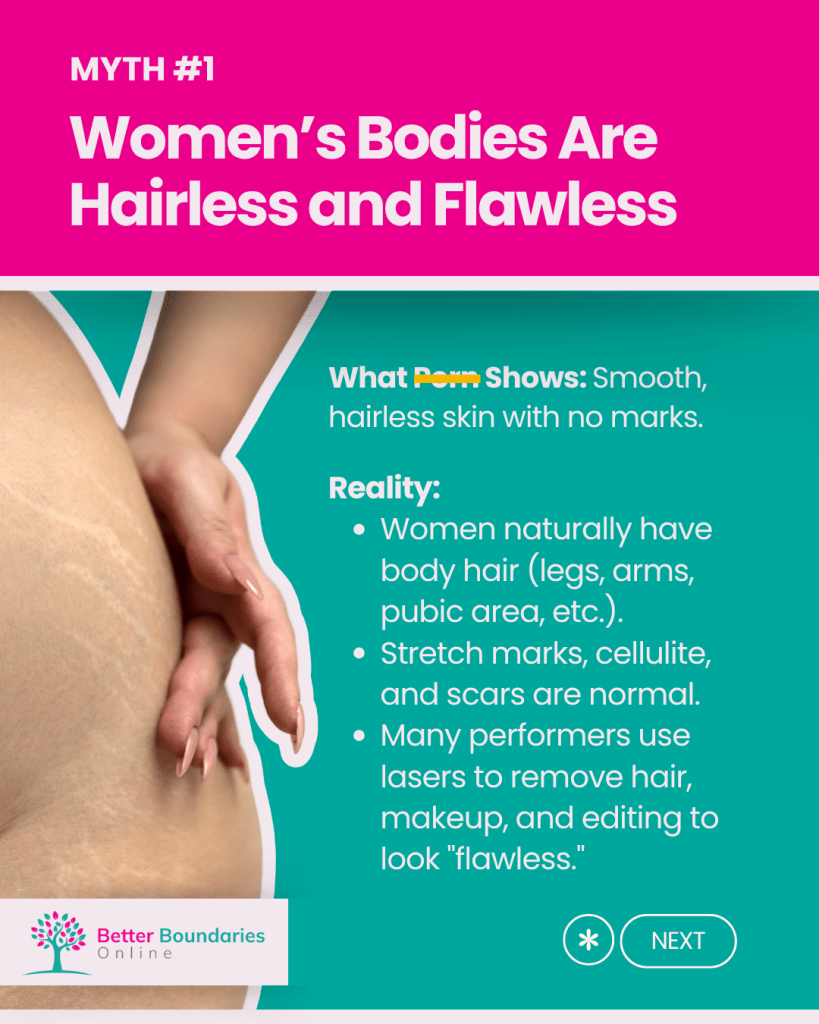
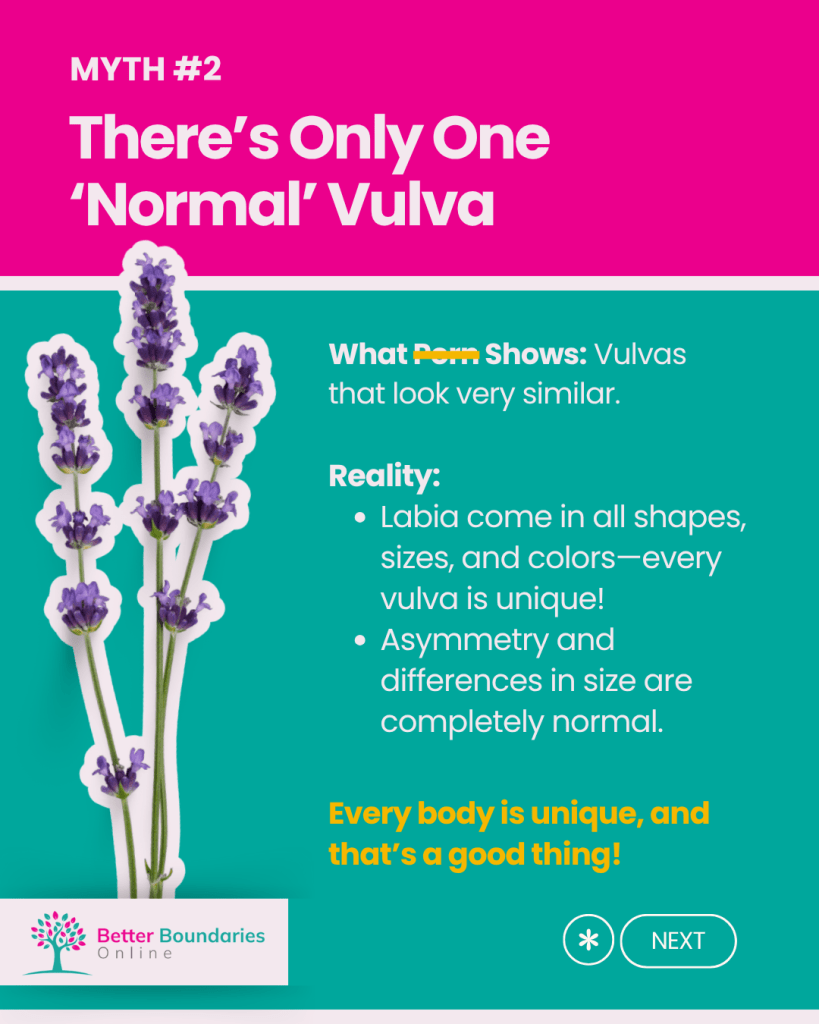
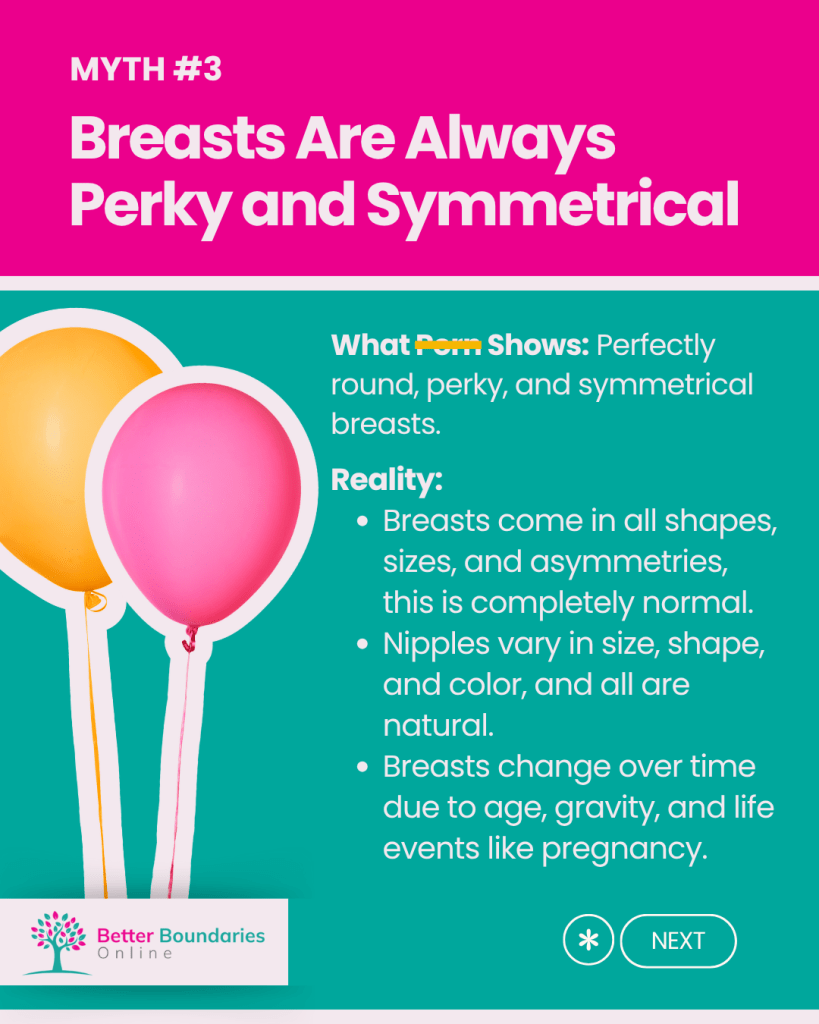

The Dangers of Porn
Today, pornography is more accessible than ever before, often reaching young people long before they’re ready to understand or process what they’re seeing. While it’s frequently portrayed as harmless or even educational, the reality is that pornography can have serious and lasting effects on the way individuals view themselves, others, and relationships.
Exposure to porn at a young age can distort a young person’s understanding of consent, body image, and intimacy. It often presents unrealistic and harmful portrayals of sex, relationships, and gender roles, which can lead to confusion, anxiety, and unhealthy expectations. Regular viewing has also been linked to addictive behaviours, reduced emotional connection in relationships, and desensitisation to real-life intimacy.
For schools and educators, it’s crucial to provide students with clear, age-appropriate information about the risks of pornography. When young people are equipped with critical thinking skills and a strong sense of self-worth, they’re better prepared to make informed choices and build respectful, healthy relationships. Open, honest conversations, free of shame and full of empathy, are key to helping students navigate this complex topic with confidence and care.
Get in touch to learn more about how we can support you.

Ask me anything!
If you have any questions about our sessions or talks, please get in touch using the button below.